
Share This Article
DR. MAHESH KAUL
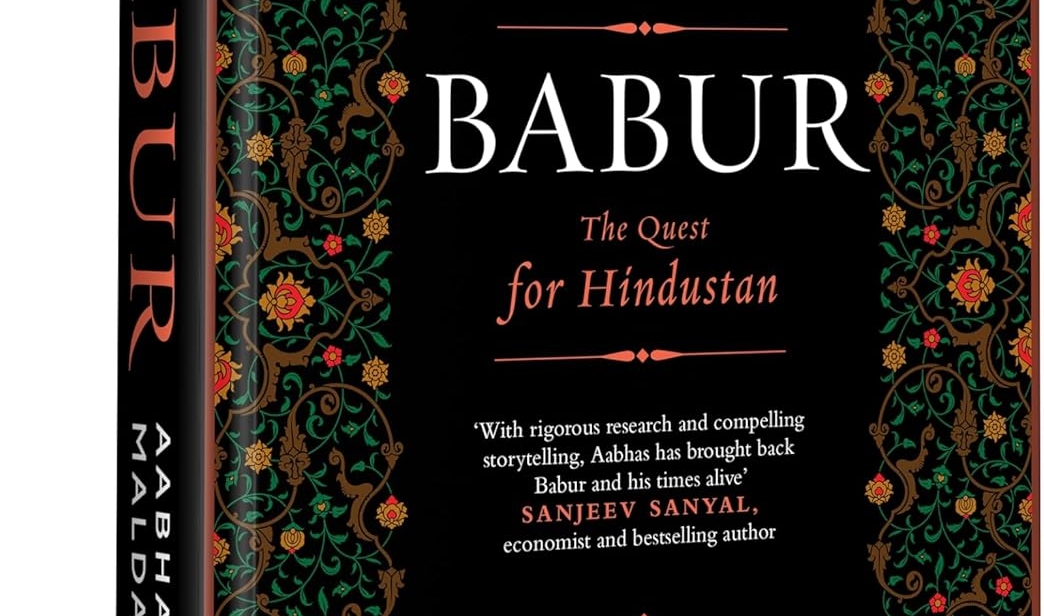
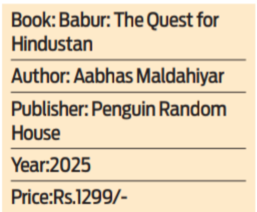
Aabhas Maldahiyar’s “Babur: The Quest for Hindustan” represents a significant contribution to the historiography of early Mughal India, offering readers a meticulously researched examination of one of history’s most consequential conquerors. Through eight distinct parts, Maldahiyar reconstructs the life, ambitions, and legacy of Zahir-ud-din Muhammad Babur, challenging conventional narratives and presenting a nuanced portrait of the founder of the Mughal dynasty. This work stands apart for its rigorous engagement with primary sources and its insistence on understanding Babur within his proper historical and cultural context as a Timurid prince rather than simply a “Mughal” emperor.
The Timurid Identity: Reclaiming Babur’s Heritage
One of Maldahiyar’s most important contributions is his emphasis on Babur’s self-identification as a Timurid rather than a Mughal. This distinction, which the author explores throughout the narrative, is crucial to understanding Babur’s motivations, worldview, and political strategies. Babur descended from Timur (Tamerlane) on his father’s side and from Genghis Khan through his mother, but he consistently emphasized his Timurid heritage and actively rejected the label “Mughal,” which he associated with the Mongols and considered somewhat derogatory.
Maldahiyar demonstrates how this Timurid identity shaped Babur’s entire enterprise. As a Timurid prince, Babur inherited not just a genealogical claim but an entire cultural and political framework that emphasized urbane sophistication, architectural patronage, Persian literary culture, and the legacy of Timur’s empire centered on Samarkand. The author argues convincingly that Babur’s quest for Hindustan was fundamentally shaped by his failure to secure and maintain Samarkand, the jewel of the Timurid realm. Having been repeatedly expelled from his ancestral capital by the Uzbek Shaybanids, Babur sought to establish a worthy successor state that could embody Timurid values and legitimacy.
Primary Sources and Scholarly Methodology
Maldahiyar’s work distinguishes itself through its sophisticated engagement with primary sources. The foundation of his research rests on Babur’s own memoir, the “Baburnama” (Tuzuk-i-Baburi), written in Chaghatai Turkic. The author demonstrates familiarity with this text in its original language, allowing him to capture nuances often lost in translation. The Baburnama provides unprecedented insight into Babur’s thoughts, strategies, aesthetic sensibilities, and personal observations about the lands he conquered.
Beyond Babur’s autobiography, Maldahiyar draws extensively from Persian chronicles of the period, including works by court historians who served under Babur and his immediate successors. These include accounts from Khwandamir and other contemporary observers who documented the political landscape of Central Asia and North India during this turbulent period. The author also consults Afghan and Central Asian sources that provide alternative perspectives on Babur’s campaigns, particularly regarding his conflicts with the Lodhi dynasty and various regional powers.
Importantly, Maldahiyar engages with archaeological evidence, architectural studies, and numismatic records to corroborate and contextualize the textual sources. This interdisciplinary approach allows him to reconstruct not just military and political events but also the cultural and economic dimensions of Babur’s rule. The author’s critical evaluation of these sources, acknowledging their biases and limitations while extracting reliable historical information, demonstrates sophisticated historical methodology.
The Balkh Campaigns: Ambition and Frustration
The Balkh campaigns receive substantial attention in Maldahiyar’s narrative, serving as a crucial lens through which to understand Babur’s character and evolving ambitions. Balkh, an important city in northern Afghanistan, represented both strategic and symbolic significance for Babur. The author details how Babur’s attempts to control Balkh were part of his larger strategy to consolidate power in the Timurid heartland and use it as a base for reclaiming Samarkand.
Maldahiyar’s analysis reveals how these campaigns illustrate Babur’s military acumen, his ability to forge and break alliances, and ultimately the limitations of his power in Central Asia. The repeated setbacks in Balkh and the broader struggle against the Uzbeks under Muhammad Shaybani Khan and his successors forced Babur to reassess his priorities. The author argues that these failures in Central Asia were not merely military defeats but catalysts that redirected Babur’s ambitions southward toward Kabul and eventually Hindustan.
The Balkh campaigns also reveal Babur’s pragmatic approach to statecraft. Maldahiyar shows how Babur was willing to negotiate with the Safavid Persians, despite religious differences, when it served his strategic interests. This pragmatism, born from the harsh realities of Central Asian politics, would later characterize his approach to governing the diverse territories of North India.
Chapter-Wise Analysis
The opening sections establish Babur’s early life in Fergana, his first conquest of Samarkand as a teenager, and his subsequent expulsion. Maldahiyar skillfully portrays the formative experiences that shaped Babur’s character: early triumph followed by devastating loss, teaching him resilience and strategic patience. These chapters emphasize the Central Asian context that is often underappreciated in studies focused primarily on Babur’s Indian conquests.
The middle sections detail Babur’s consolidation of power in Kabul and his exploratory raids into the Punjab. Maldahiyar presents these not as random plundering expeditions but as carefully calculated reconnaissance missions that allowed Babur to understand the political fragmentation of the Lodhi sultanate and identify opportunities for conquest. The author’s analysis of Babur’s intelligence-gathering and his cultivation of relationships with disaffected Lodhi nobles reveals a sophisticated strategic mind.
The climactic sections cover the conquest of Hindustan, particularly the pivotal Battle of Panipat in 1526 and the subsequent Battle of Khanwa against Rana Sanga. Maldahiyar provides detailed tactical analysis of these engagements, highlighting Babur’s innovative use of artillery and field fortifications (tulughma and araba tactics) that proved decisive against numerically superior forces. The author argues that these victories were not mere flukes but resulted from Babur’s synthesis of Ottoman military innovations with his own Central Asian cavalry traditions.
The concluding sections examine Babur’s brief reign in India, his attempts to establish administrative structures, and his cultural responses to his new realm. Maldahiyar poignantly captures Babur’s ambivalence toward India, evident in the Baburnama’s descriptions of the subcontinent’s climate, customs, and geography, which Babur often found inferior to his beloved Central Asian homelands. Yet the author also shows Babur’s pragmatic adaptations and his laying of foundations that his successors would build upon.
Babur’s Intentions and Vision for Hindustan
Maldahiyar’s research illuminates Babur’s complex motivations for conquering Hindustan. Unlike later historiography that portrays the Mughal conquest as part of a predetermined imperial destiny, the author reveals how contingent and evolving Babur’s plans actually were. Initially, Hindustan represented a source of wealth to fund his Central Asian ambitions. The fertile plains and rich cities of North India could provide resources for another attempt to reclaim Samarkand and restore Timurid glory in its traditional heartland.
However, as Babur’s Central Asian options narrowed, particularly after the consolidation of Uzbek power and the rise of Safavid Persia, Hindustan transformed from a means to an end into an end in itself. Maldahiyar argues that Babur began to envision establishing a Timurid successor state in India that could rival the glory of Timur’s empire. This shift is reflected in Babur’s increasing investment in Indian affairs, his construction projects, his establishment of Timurid-style gardens, and his attempts to transplant Central Asian administrative practices.
The author emphasizes that Babur’s vision was fundamentally that of a conqueror-colonizer from a superior (in his view) civilization bringing order and refinement to a land he considered culturally inferior, despite its material wealth. This Timurid civilizing mission, rooted in Persian high culture and Central Asian political traditions, would profoundly shape the character of Mughal rule for generations.
Policy Innovations and Their Impact on India
Maldahiyar’s analysis of Babur’s policies reveals a ruler attempting to balance Timurid traditions with Indian realities. Though Babur’s reign in Hindustan lasted only four years, his policy choices established precedents with lasting consequences.
Administratively, Babur maintained much of the Lodhi sultanate’s revenue system while introducing Timurid practices in court protocol and military organization. His policy of religious pragmatism, including the famous prohibition of cow slaughter to mollify his Hindu subjects, demonstrated political astuteness, even if it conflicted with his personal orthodox beliefs. Maldahiyar argues that this pragmatism, though sometimes reluctant, established a template for Mughal governance that his grandson Akbar would later systematize.
Culturally, Babur’s patronage of Persian literature, his own literary productions, and his introduction of Timurid architectural and garden aesthetics initiated processes of cultural synthesis that would define Mughal civilization. The author shows how Babur’s Kabul and Agra gardens, designed in the Central Asian chahar-bagh style, represented attempts to recreate his homeland’s environment and would evolve into the distinctive Mughal garden tradition.
Militarily, Babur’s integration of gunpowder technology with cavalry tactics revolutionized Indian warfare. Maldahiyar details how Babur’s victories demonstrated the effectiveness of disciplined firearm infantry and mobile artillery, forcing subsequent Indian rulers to modernize their own military practices.
Understanding Babur’s Machinations Through Maldahiyar’s Research
“Babur: The Quest for Hindustan” succeeds remarkably in illuminating the strategic thinking and political calculations that drove Babur’s career. Maldahiyar’s careful reconstruction reveals Babur as a master of realpolitik who combined military brilliance with diplomatic cunning. The author traces how Babur systematically exploited divisions among his enemies, whether Uzbek rivals in Central Asia or Lodhi nobles in India, while carefully managing his own coalition of Timurid loyalists, Afghan adventurers, and opportunistic allies.
The book reveals Babur’s sophisticated understanding of legitimacy and propaganda. Maldahiyar shows how Babur cultivated his image as a Timurid heir, a ghazi (religious warrior), and a just ruler, deploying these different personas strategically depending on his audience. The Baburnama itself, the author argues, was partly a legitimizing document designed to justify Babur’s conquests and establish his dynasty’s credentials.
Maldahiyar’s research also exposes the contradictions in Babur’s character: a cultured poet and memoirist who could also be ruthlessly violent; a ruler who valued loyalty but frequently shifted alliances when expedient; a man who expressed longing for his Central Asian homeland while working to establish permanent rule in India. These contradictions, rather than undermining Babur’s historical significance, humanize him and make his achievements more remarkable.
Aabhas Maldahiyar’s “Babur: The Quest for Hindustan” represents mature historical scholarship that rescues Babur from both hagiography and demonization. By insisting on understanding Babur as a Timurid rather than simply the founder of the “Mughal” dynasty, by carefully engaging with primary sources, and by contextualizing his Indian conquests within his broader career and Central Asian origins, Maldahiyar provides readers with a sophisticated and nuanced portrait of a complex historical figure.
The book’s greatest strength lies in its integration of military, political, cultural, and personal dimensions of Babur’s life into a coherent narrative that explains both his successes and limitations. For students of South Asian history, Central Asian history, and early modern empire-building, this work is essential reading. It demonstrates how individual ambition, strategic calculation, cultural identity, and historical contingency combined to shape events that would influence the subcontinent for centuries. Maldahiyar has given us not just a biography but a window into the tumultuous world of sixteenth-century Eurasia and the emergence of one of history’s most significant dynasties.
(Author is Editorial Director, The Chancellor)