
Share This Article
DR.MAHESH KAUL
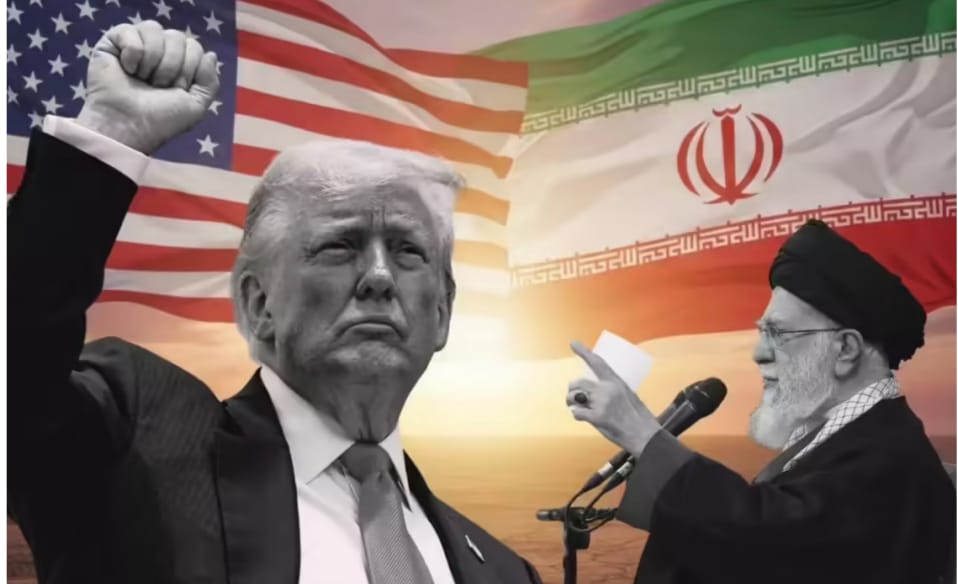
Few geopolitical fault lines carry the destructive potential of the Iran–United States conflict. What began as a revolutionary rupture in 1979 has evolved into a structural antagonism that shapes the security architecture of West Asia, influences global energy markets, drives nuclear non-proliferation debates, and increasingly touches the strategic calculations of powers as far away as India, China, and Russia. In 2025, with Iran’s nuclear programme at an advanced stage, proxy wars burning across the Middle East, and diplomatic channels all but frozen, the conflict has entered one of its most dangerous phases. Understanding its history, its military dimensions, its economic consequences, and what it means for India is essential for anyone seeking to grasp the contemporary world order.
History of Mutual Hostility
The roots of the Iran–US conflict reach deep into the twentieth century. In 1953, the CIA and British intelligence orchestrated the overthrow of democratically elected Prime Minister Mohammad Mosaddegh, restoring the Shah to power and embedding American influence in Tehran for a quarter century. It has never been forgotten in Iranian political memory. The 1979 Islamic Revolution that toppled the Shah was as much an assertion of independence from American hegemony as it was a religious transformation. When revolutionary students stormed the US Embassy in Tehran and held 52 diplomats hostage for 444 days, diplomatic relations collapsed — and have never been formally restored.
Washington’s subsequent decisions deepened Iranian grievances. During the Iran–Iraq War (1980–88), the United States provided intelligence and weapons to Saddam Hussein even as Iraqi forces used chemical weapons against Iranians. In 1988, the USS Vincennes shot down Iran Air Flight 655, killing all 290 passengers and crew, an event that Iran considers an unpunished war crime. President George W. Bush’s designation of Iran as part of an “Axis of Evil” in 2002, alongside Iraq and North Korea, foreclosed diplomatic engagement just as reformist President Khatami was seeking a thaw. The 2003 invasion of Iraq paradoxically strengthened Iran by eliminating its chief rival and opening space for Iranian-backed Shia political forces to dominate Baghdad.
The 2015 Joint Comprehensive Plan of Action (JCPOA), negotiated under President Obama, offered a rare moment of diplomatic hope. Iran agreed to curb its nuclear programme in exchange for sanctions relief. But President Trump unilaterally withdrew the United States from the deal in 2018, reimposing and intensifying sanctions under a “maximum pressure” campaign. The assassination of General Qasem Soleimani, commander of the Quds Force and the architect of Iran’s regional influence network, by a US drone strike in Baghdad in January 2020, brought the two nations to the precipice of open war. Biden’s attempts to revive the nuclear deal stalled, and relations have remained in a deep freeze, punctuated by proxy skirmishes, cyberattacks, and naval confrontations.
The Nuclear Factor
No dimension of the Iran–US conflict carries greater existential weight than Iran’s nuclear programme. Tehran has consistently maintained that its enrichment activities are for civilian energy and medical purposes, citing its rights under the Nuclear Non-Proliferation Treaty. The United States, Israel, and their allies believe — with substantial evidence — that Iran seeks, or at minimum preserves the option for, nuclear weapons capability.
The collapse of the JCPOA has removed all meaningful constraints on Iranian enrichment. By 2023–24, Iran had enriched uranium to 60% purity — significantly beyond the 3.67% cap set by the JCPOA and approaching the 90% needed for weapons-grade material. Iran has also operated advanced centrifuges, accumulated large stockpiles of enriched uranium, and reduced cooperation with International Atomic Energy Agency (IAEA) inspectors. The IAEA has repeatedly reported that Iran’s programme has no credible civilian justification at current enrichment levels.
The nuclear question intersects with Israeli security calculations. Israel has explicitly threatened pre-emptive military strikes on Iranian nuclear facilities, a course of action it has previously taken against Iraq (1981) and Syria (2007). An Israeli strike would almost certainly draw Iranian retaliation, activating proxy forces across Lebanon, Gaza, Iraq, and Yemen, and likely forcing the United States into a broader conflict. The nuclear factor thus acts as an accelerant on every other dimension of the Iran–US conflict, making diplomatic resolution urgent and military escalation increasingly probable.
Military Build-Up
The Persian Gulf has become one of the world’s most militarised waterways. The United States maintains a massive military presence in the region: the US Fifth Fleet is headquartered in Bahrain, carrier strike groups rotate through the Gulf, and thousands of troops are stationed in Kuwait, Qatar, Saudi Arabia, the UAE, and Iraq. In periods of heightened tension, the US has surged B-52 bombers, nuclear-capable submarines, and additional destroyers to the region as a show of force.
Iran’s military strategy is asymmetric. Unable to match American conventional power, Tehran has built a formidable arsenal of ballistic and cruise missiles capable of striking targets across the region, including US bases and Israeli cities. Iran’s fleet of armed drones, demonstrated in the October 2023 regional escalation and in direct attacks on Israel in April 2024, has proven its reach. The Islamic Revolutionary Guard Corps (IRGC) Navy conducts regular harassment of US naval vessels in the Gulf, and Iran’s proxy network — Hezbollah in Lebanon, Kata’ib Hezbollah in Iraq, the Houthis in Yemen, and Palestinian Islamic Jihad in Gaza — constitutes a ring of fire around American allies.
The threat to international peace is structural and severe. Both sides have red lines that the other routinely approaches. A miscalculation — an accidental naval collision, a drone misidentified as hostile, a proxy attack that kills too many Americans — could trigger a cascade toward open war. Unlike the Cold War, there are no established hotlines, crisis communication protocols, or formal deconfliction mechanisms between Washington and Tehran. The absence of any diplomatic infrastructure makes crisis management nearly impossible.
US Policy and Iran’s Response
American policy toward Iran has rested on three pillars for over two decades: economic strangulation through sanctions, military deterrence through forward deployment, and diplomatic isolation through multilateral pressure. The sanctions regime is comprehensive, targeting Iran’s oil exports, its banking system, its shipping industry, and individual leaders. Secondary sanctions penalise third-country companies and governments that do business with Iran, effectively forcing even friendly nations to choose between the Iranian market and access to the US financial system.
The Biden administration sought to return to the JCPOA framework but was unable to bridge the gap between Iranian demands — including removal of the IRGC’s terrorist designation and guarantees against future US withdrawal — and domestic political constraints in Washington. The Trump administration’s return to power in 2025 has once again shifted policy back toward maximum pressure, with additional sanctions and explicit threats of military action if Iran crosses certain nuclear thresholds.
Iran has responded to this pressure with a combination of defiance, deterrence, and diversification. Diplomatically, Tehran has deepened ties with Moscow and Beijing, signing a 25-year strategic partnership with China and engaging in joint military exercises with Russia. Economically, Iran has built shadow oil export networks, using ship-to-ship transfers and front companies to sell crude to China and others. Militarily, Iran has escalated its nuclear programme, expanded its missile forces, and activated proxy networks — signalling that any US or Israeli attack would exact a heavy regional price. Iran’s foreign policy narrative frames its resistance as anti-imperialist, earning it sympathy across parts of the Global South.
The Strait of Hormuz
The Strait of Hormuz is a narrow passage barely 33 kilometres wide at its narrowest point, connecting the Persian Gulf to the Gulf of Oman and the wider world. Through it flows approximately 21 million barrels of oil per day — nearly one-fifth of global petroleum consumption. It is also a critical corridor for liquefied natural gas (LNG), particularly from Qatar, the world’s largest LNG exporter. There is simply no economically viable alternative route for most of this traffic.
Iran has repeatedly threatened to close the Strait in the event of military attack or intensified sanctions. The IRGC Navy regularly conducts exercises simulating the mining and blockage of the waterway. In strategic terms, the Strait of Hormuz is Iran’s most potent non-nuclear instrument of coercion. Its threatened or actual closure would immediately spike global oil prices — estimates range from $100 to well above $150 per barrel in a sustained closure scenario — and would send shockwaves through already fragile global economies.
A closure scenario would unfold rapidly. Iranian mines and anti-ship missiles, combined with IRGC small-boat swarm tactics, would make the strait extraordinarily dangerous for commercial shipping. Insurance costs for vessels in the region would become prohibitive. The US Navy could attempt to force the strait open, but this would involve sustained combat operations against Iranian coastal defences, missile batteries, and submarine forces. The operation would not be quick. In the interim, global energy markets would be in crisis, oil-importing nations would face severe shortfalls, and the global economic shock could dwarf the effects of the 2022 energy crisis triggered by the Russia–Ukraine war. For India, which imports over 80% of its crude oil needs, a Hormuz closure would be an economic emergency of the highest order.
Implications for West Asia
A full-scale Iran–US conflict would fundamentally redraw the strategic map of West Asia. The Gulf Cooperation Council states — Saudi Arabia, the UAE, Kuwait, Qatar, Bahrain, and Oman — would face an impossible choice between their security dependence on Washington and their geographic proximity to Tehran. Saudi Arabia and the UAE, already engaged in a complex détente with Iran mediated by China, could be forced back into confrontation. Iraq, which hosts both American troops and Iranian-aligned militias, would become a primary battlefield. The Lebanese state, already hollowed out, could collapse entirely under the weight of a Hezbollah–Israel war triggered by an Iran–US conflict.
The humanitarian catastrophe would be without precedent in the region’s modern history. Iranian cities, with their populations of millions, would face strikes on infrastructure and military sites. The refugee flows into Turkey, Pakistan, and Europe would strain international systems. The war would also empower extremist movements, create ungoverned spaces, and set back the fragile stabilisation efforts in Syria, Yemen, and Libya. The entire arc from the Mediterranean to the Gulf of Oman would be destabilised for a generation.
Impact on India
India’s exposure to the Iran–US conflict is multi-dimensional and profound. The most immediate vulnerability is energy. India is the world’s third-largest oil importer, consuming over five million barrels per day. Before the re-imposition of US sanctions in 2018, Iran was one of India’s top three oil suppliers, providing competitively priced crude on favourable credit terms. Sanctions forced India to cut Iranian imports to near zero. Any conflict or Hormuz closure would send global crude prices soaring, dramatically widening India’s current account deficit, stoking domestic inflation, and potentially destabilising the rupee.
Beyond crude oil, India’s strategic investment in Chabahar Port on Iran’s southeastern coast is directly at stake. Chabahar is India’s gateway to landlocked Afghanistan and, through the International North-South Transport Corridor (INSTC), to Central Asia and Russia — bypassing Pakistan entirely. India has invested over $500 million in developing the port and associated rail links. While Washington has granted India a specific sanctions waiver for Chabahar given its strategic importance for Afghan reconstruction, a military conflict would render these investments worthless overnight and eliminate India’s hard-won connectivity advantage.
India’s diaspora dimension is equally compelling. Over nine million Indians live and work in the Gulf Cooperation Council countries, remitting over $40 billion annually — India’s single largest source of foreign exchange. A regional war would endanger their lives, trigger mass evacuation operations, and cut off these remittances. India’s trade with the Gulf and West Asia, worth hundreds of billions of dollars annually, traverses’ sea lanes that would become war zones. The Houthi attacks on Red Sea shipping since late 2023 — themselves a proxy dimension of the Iran conflict — have already raised shipping costs and disrupted Indian trade flows significantly.
India’s Policy Imperatives
India must approach the Iran–US conflict not as a spectator but as an active stakeholder with major interests at risk. The foundational principle must be strategic autonomy — India cannot afford to be a satellite of either Washington or Tehran. New Delhi must be honest with both sides about its interests while refusing to be conscripted into either camp.
With the United States, India should engage vigorously to secure sustained sanctions waivers for Chabahar, framing the port’s development as a stabilising regional presence aligned with American interests in Central Asian connectivity and Afghan stabilisation. India should also press Washington to consider the economic damage inflicted on friendly developing nations by secondary sanctions, arguing for a rules-based approach that differentiates allies from adversaries.
With Iran, India should maintain active diplomatic engagement, using back-channel communication to reinforce its commitment to the bilateral relationship while urging Tehran to exercise restraint and return to nuclear negotiations. India’s traditional relationships with Iranian political, academic, and business elites — built over centuries of cultural and commercial exchange — give it access that few Western nations possess.
Multilaterally, India should use its voice in the United Nations Security Council (as a non-permanent member when it holds a seat), the G20, the Shanghai Cooperation Organisation, and other forums to advocate consistently for dialogue, diplomatic resolution, and adherence to international law. India must resist pressure to vote with either bloc on Iran-related resolutions and instead push for negotiated outcomes.
On energy security, the conflict is a reminder of India’s structural vulnerability to Persian Gulf disruption. India must accelerate its transition to renewable energy, diversify oil import sources toward Africa, Russia, and the Americas, and build strategic petroleum reserves sufficient to cushion a sustained supply shock. These are not merely energy policy choices — they are national security imperatives.
Indian Foreign Policy Options
India’s foreign policy in the Iran–US conflict should be anchored in five principles. First, national interest above ideological alignment: India should be guided by the impact of any development on Indian energy security, diaspora safety, trade access, and strategic connectivity — not by abstract solidarity with either side. Second, multi-alignment as a strength: India’s ability to engage simultaneously with Washington, Tehran, Moscow, and Riyadh is a diplomatic asset; it should be exercised, not apologised for. Third, proactive diplomacy: India should not wait for crises to erupt before engaging; sustained high-level diplomatic contact with all parties allows India to be a credible mediator and crisis interlocutor.
Fourth, economic resilience through diversification: every dimension of India’s economic exposure to the Gulf — energy, remittances, trade — needs a risk mitigation strategy. Fifth, regional leadership: India’s aspiration to be a leading power requires it to play a constructive role in West Asian stability. A war in the Gulf is a failure for Indian diplomacy. India has every incentive to prevent conflict and should invest political capital accordingly, including by supporting revival of the JCPOA framework and engaging in confidence-building measures between the parties.
The Iran–US conflict is not a distant quarrel among others. It is a structural fault line in the international system with the potential to trigger a regional war, spike global energy prices, disrupt trade routes, and set back nuclear non-proliferation for a generation. For India, the stakes are existential in economic terms and deeply significant in strategic terms. Passivity is not an option. India must bring the full weight of its diplomatic relationships, its multilateral standing, its economic leverage, and its civilisational tradition of dialogue to bear on preventing escalation. In a world where great powers are increasingly confrontational and multilateral institutions are under strain, India’s distinctive capacity to speak to all sides — Washington and Tehran, Riyadh and Moscow, Beijing and Tel Aviv — is perhaps its most valuable foreign policy asset. It must use it, urgently and wisely.
(Author is Editorial Director, The Chancellor)