


Share This Article
Dr. MADHULIKA SINGH
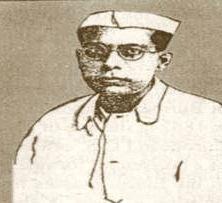
Pandit Pyare Mohan Dattatray’s ancestors originally hailed from Rainawari in Srinagar, Kashmir Valley. Around 1716, during the reign of Mughal Emperor Farrukh Siyar, his family migrated to Delhi and settled in the Kashmiri locality of Bazar Sitaram. His father, Brij Narayan Dattatray, was a reputed Urdu poet, and his mother was Bageshwari Dattatray.
Born in 1895, Pyare Mohan received his early education in Lahore, matriculating from Government College in 1912. He earned a B.A. in 1916 and an LLB in 1918 from Punjab University before beginning his legal practice at Lahore High Court. Gifted with a sharp intellect and a revolutionary spirit, he was deeply conscious of human rights and dignity, even under British imperial rule. Witnessing Mahatma Gandhi’s forcible removal from a railway compartment, he challenged the practice of reserving special compartments exclusively for Anglo-Indians, filing a case at Lahore High Court at a time when Public Interest Litigation (PIL) was not yet common. Such actions brought him under the watchful eye of British authorities.
Furthermore, the socio-political developments in Punjab also impacted his sensitive mind. In 1905, the incident of partition of Bengal, deliberately done to communally divide the center of nationalism on the pretexts of administrative concerns had its repercussions on the Punjab province also. During the first world war, the Punjab province made maximum contribution to the war efforts in terms of men and materials. A large number of Punjab peasantry was recruited in the British army to fight the allied forces on different battle fronts and enormous amount of money was also donated as the war fund. Despite all this, British brought Rowlatt Act (1919) to curb the freedom movement. During this time, young Pyare Mohan Dattatray joined the Tribune, the leading English newspaper of Lahore and was raised to the post of Assistant Editor under the guidance of Kali Nath Roy who was the Chief editor of the paper. As a journalist, he covered the meetings of the Congress party and thus, came in close contact with the national level leaders of the Punjab province like Lala Lajpat Rai, Bipin Chandra Pal, Lala Harkishanlal, Dr. Kichleu, Dr Satyapal, etc. Inspired by the speeches of those fire brand leaders, Pyare Mohan joined the Congress and actively plunged into the freedom movement. He started wearing Khadi and became hard core nationalist.
In 1907, the British government, on a precautionary note, took drastic actions against the alarming social activities of the Arya Samajists and initiated criminal proceedings against them. Fictitious conspiracy cases were launched against the national leaders in 1913-14 which surcharged the political atmosphere of the province and forced people to express their disenchantment against the unjust British rule.
The Jallianwala bagh massacre pierced the heart of young Pyare Mohan so much so that he wrote a book entitled, ‘Rebellion and How It Was Suppressed’ in An Imaginary1919 which was published by Khosla brothers, Lahore, in 1920. In this book, he gave an eye witness account of the British atrocities in the province after interviewing large masses from the various sections of the society. In this connection, he undertook an in-depth study of all the government records and documents, thus, producing the most authentic historical work giving first-hand information of the turmoil in the Punjab region. The forward of the book was written by Lala Lajpat Rai. The British not only proscribed this book but the author was also put under detention on charges of sedition and spreading ill-will against them. However, with the efforts of Ravi Mohan Bakaya, this work was later published under the changed title The Punjab Rebellion of 1919 and How it was Suppressed by Gyan Publishing House, New Delhi, in 1999.
Further, during the Khilafat movement, as a dedicated member of the Congress party, Pyare Mohan found himself in a fix over Gandhiji’s decision of mixing religion and politics as he found it totally against the basics of democracy and fair play. During the protest against the Simon Commission, when the Congress leaders who were leading the demonstrations were lathi charged and arrested for defying the law, Pyare Mohan Dattatray, as a staunch nationalist, wrote a powerful article in the Tribune and was subsequently arrested by the SSP of Lahore and sent to jail for writing an inflammatory article. He fought a case against his detention himself and remained successful in getting himself released.
Though he faced many ups and downs in life while actively participating in the freedom movement, he faced all odds and unpleasant situations with courage and determination. Pyare Mohan took up the profession of journalism as a mission without compromising the ethical principles and maintained its high ideals. He was politically very sensitive and had developed the knack of reading the pulse of the people accurately. His analysis of the political events was superb. He was an erudite scholar and thinker and used to write all his articles with great authority after investigating every event thoroughly.
Unfortunately, he died young at the age of 41 in the prime of his youth. His dedication and love for nation will keep on inspiring the youth of the nation. Pyare Mohan’s upholding of the basic human values and his effortless work for maintaining human dignity even in the oddest situations of life has made him such an immortal soul who will always be remembered by the society:
Har kadam per thokere khate chale,
Adher phir bhi phool bikhrate chale
Ankhon ne kise ishara ker diya
Andhiyon toofan se tekrate chale
(Author is Associate Professor, Department of History, University of Jammu)
