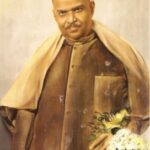




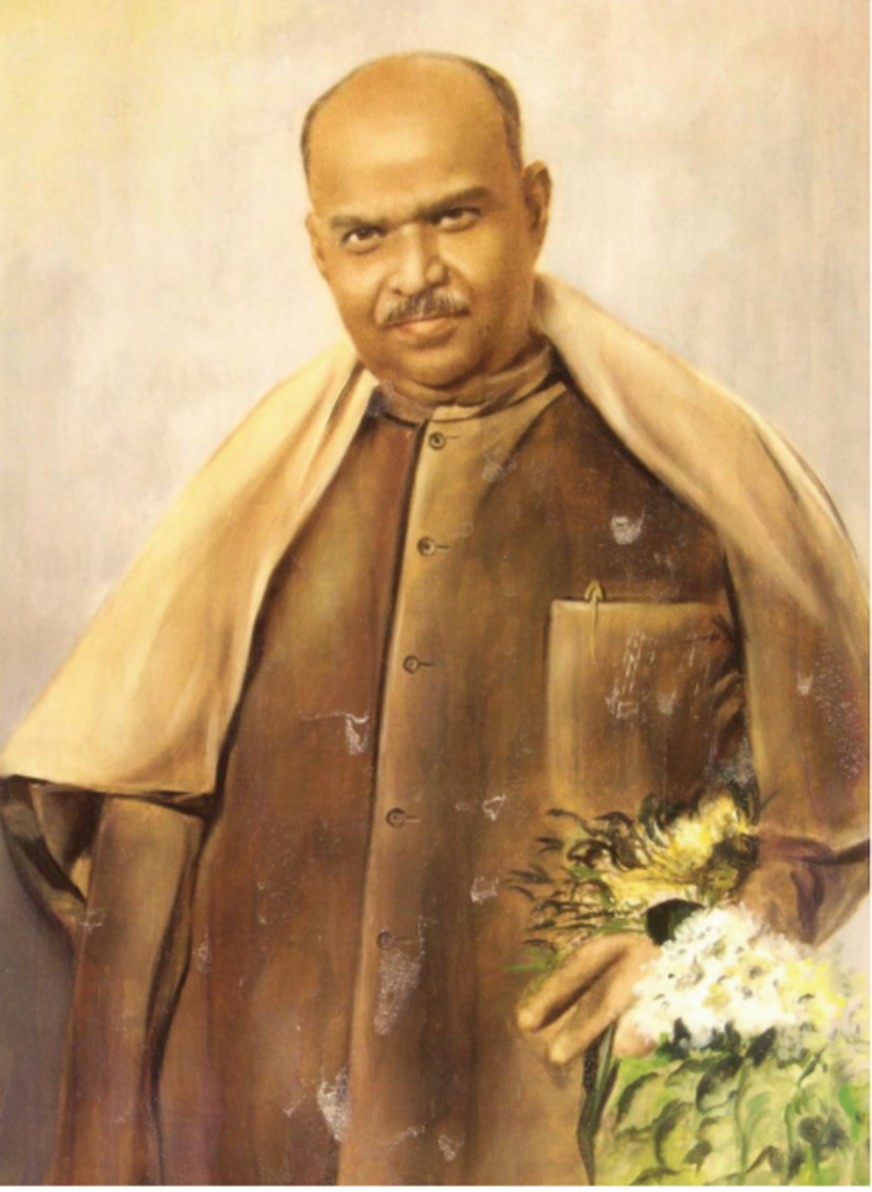
Dr. Syama Prasad Mookerjee: The Sentinel of Bharat’s Territorial & Civilisational Unity
DR.MAHESH KAUL
Every 6th of July, Bharat pauses to remember Dr Syama Prasad Mookerjee — barrister, educationist, parliamentarian, and founder of the Bharatiya Jana Sangh(BJS). He is customarily eulogised in the vocabulary of martyrdom and rightly so. But to reduce Dr. Mookerjee to the manner of his death is to obscure the coherence of his life — a life in which scholarship, resistance to communal appeasement in Bengal, principled opposition within Nehru’s own cabinet and the final vigil in Srinagar were not separate chapters but a single, unbroken argument: that Bharat’s unity and the security of her Hindu population were not negotiable within a federation of expedient compromises.
He rose, within the space of little more than two decades, from the vice-chancellorship of India’s foremost university to the status many contemporaries and later historians have accorded him — the tallest political leader of the post-Independence era to place the territorial integrity and civilisational coherence of Bharat above party, office and personal safety. That trajectory, from convocation hall to prison cell, is the true measure of the man this article seeks to recover from ceremony and restore to argument.
Youngest Vice-Chancellor of Calcutta University
Born in Calcutta in 1901 to Sir Ashutosh Mookerjee, a towering educationist in his own right, Syama Prasad inherited not privilege alone but a conviction that scholarship was a form of national service. A brilliant academic career — degrees in English and Bengali, a Bar-at-Law from Lincoln’s Inn — culminated in his appointment, in 1934, at the age of thirty-three, as the youngest Vice-Chancellor in the history of Calcutta University. This was not a ceremonial post secured by lineage; under his stewardship the university was steered through years of financial and administrative strain while expanding its academic ambitions. For Mookerjee, the university was inseparable from the nationalist project — an institution that had to produce citizens equipped to inherit and defend a free Bharat, not merely degree-holders.
He introduced Bengali and Hindi as mediums of examination, expanded the University’s engagement with technical and scientific education, and resisted colonial interference in academic appointments — treating institutional autonomy itself as a front of the freedom struggle. His scholarship and his nationalism were never parallel pursuits; the same conviction that a subject people needed indigenous institutions of learning free of colonial tutelage would later drive his insistence that a reunited, self-respecting Bharat needed indigenous institutions of governance free of appeasement. It was this record of proven administrative competence, rare among the political class of his generation, that made his subsequent inclusion in Nehru’s first cabinet unsurprising even to his adversaries.
Communal Division in Bengal
The Bengal Mookerjee inherited politically was a province the colonial administration had systematically engineered into communal blocs, from the first partition of 1905 to the weighted electorates of the Communal Award. Separate electorates, differential representation, and administrative patronage hardened identity into rivalry, leaving Bengal’s Hindus — numerically declining in the east of the province — structurally exposed. Mookerjee entered public life inside this engineered fracture, first with the Congress, from which he resigned within a year over its handling of communal questions, and subsequently as an independent voice who understood, earlier than most of his contemporaries, that constitutional rights unaccompanied by demographic and physical security were rights on paper alone.
Guardian of Bengal’s Hindus
As President of the Akhil Bharatiya Hindu Mahasabha from 1943 to 1946, Mookerjee confronted the Bengal famine, the Great Calcutta Killing of August 1946, and the Noakhali violence that followed — episodes in which Bengali Hindus faced organised targeting on a scale that contemporaries did not hesitate to call genocidal. Mookerjee held the Congress leadership’s response — vacillating, conciliatory towards the Muslim League, unwilling to name the violence for what it was — squarely responsible for leaving Bengal’s Hindus defenceless. When partition became unavoidable, it was Mookerjee who led the campaign to partition Bengal itself, ensuring that a Hindu-majority West Bengal remained within India rather than the whole province being ceded to Pakistan — a campaign the Congress leadership in Bengal had been reluctant to press. This was not communal maximalism; it was, in his own reasoning, the only realistic guarantee against the erasure of an entire community from its ancestral homeland.
Nehru–Liaquat Pact
Inducted into Nehru’s first cabinet on 15 August 1947 as Minister for Industry and Supply — a measure of the respect he commanded even among ideological adversaries — Mookerjee served with distinction until April 1950. The Nehru–Liaquat Pact of 8 April 1950 sought to guarantee minority rights on both sides of the new border, even as trainloads of Hindu refugees continued to arrive from East Pakistan bearing testimony to riots and organised killings the Pact did nothing to halt. Mookerjee resigned from the Union Cabinet, judging that a government which could not or would not act to stop the killing of Hindus in East Bengal had forfeited the right to his continued participation. It was an act of conscience over office — the same calculus by which he would, three years later, forfeit his life.
Founding the Bharatiya Jana Sangh
Free of both the Congress and a Hindu Mahasabha he had come to regard as ideologically narrow, Mookerjee set about building a national alternative grounded in constitutional nationalism rather than sectarian reaction. The Rashtriya Swayamsevak Sangh, under Guru Golwalkar, deputed Pandit Deendayal Upadhyaya to organise and strengthen the new formation. On 21 October 1951, the Bharatiya Jana Sangh was founded — India’s first opposition party to contest Congress hegemony not on personality but on a coherent civilisational programme: one nation, one constitution, one flag; cultural nationalism in place of appeasement; and an uncompromising position on Jammu and Kashmir. In Upadhyaya, Mookerjee found not merely a lieutenant but a philosophical companion whose organisational discipline gave the fledgling party the institutional backbone to outlast its founder.
The Kashmir Question: Ek Vidhan, Ek Nishan, Ek Pradhan
No cause consumed Mookerjee’s final years more than Jammu and Kashmir’s incomplete integration. Article 370, conferring a separate constitution, a separate flag, and a separate Prime Minister on the state, struck him as a standing invitation to secession — a suspicion sharpened by the memory that the state’s accession had followed an invasion by Pakistani army regulars disguised as tribal raiders in 1947. Mookerjee gave Bharat its rallying cry against this arrangement — ‘Ek Vidhan, Ek Nishan, Ek Pradhan’ — insisting that no citizen of India should need a permit to enter any part of its own territory. He lent the full weight of his national standing to the Jammu Praja Parishad agitation led by Pandit Prem Nath Dogra, which had been demanding since 1949 that Jammu and Kashmir’s accession be completed on the same constitutional terms as every other princely state, and which Nehru had publicly dismissed as ‘communal’. For Mookerjee, the Parishad’s struggle was not a regional grievance but the front line of national integration itself.
Correspondence and Confrontation
Mookerjee’s papers and parliamentary interventions record a sustained, increasingly urgent correspondence with both Nehru and Sardar Vallabhbhai Patel, pressing the case that a special constitutional status for Jammu and Kashmir was structurally incompatible with the Union Patel had laboured to integrate elsewhere in India. Where Patel’s instincts on integration largely aligned with his own, Mookerjee found in Nehru’s continuing accommodation of Sheikh Abdullah’s demands for autonomy a betrayal of the unitary constitutional design Patel had fought to secure. His direct exchanges with Sheikh Abdullah over the permit system and the separate flag were equally unsparing, warning that a state within the state could not be reconciled with the sovereignty of the Republic. When persuasion in Delhi produced no movement, Mookerjee resolved to carry the challenge to Kashmir itself, without a permit, as a deliberate act of civil defiance.
Final Journey and the Unexplained Death
Mookerjee left Delhi by train on 8 May 1953, addressing crowds en route and informing Sheikh Abdullah by telegram of his intent to enter the state. He was arrested by the Jammu and Kashmir police on 11 May 1953 and held in a guest house in Srinagar. On 23 June 1953, after roughly forty days in detention, Dr Syama Prasad Mookerjee was found dead — a death whose true cause has never been established through an independent inquiry, despite repeated demands, including from his own mother, that one be conducted. Nehru’s government resisted a probe; the circumstances remain, to this day, officially unresolved. Within weeks, Sheikh Abdullah himself was dismissed and arrested by the very government that had declined to investigate Mookerjee’s death — a coincidence of timing that has never dispelled the suspicion surrounding it.
Unfinished Mission: From 1953 to One Bharat Today
The Bharatiya Jana Sangh Mookerjee founded, and which Deendayal Upadhyaya carried forward after him, is the direct ideological and organisational ancestor of the Bharatiya Janata Party. The abrogation of Article 370 and Article 35A in August 2019 was, in the vocabulary the BJP itself has used, the fulfilment of Mookerjee’s founding demand — the constitutional completion of a struggle he did not live to see finished. But the mission he defined was never limited to a single article of the Constitution. It was a broader civilisational commitment: that Hindus, whether in Noakhali in 1946, in the Kashmir Valley during the exodus of 1989–90, or wherever organised violence has targeted them for their faith, are entitled to the full and undiluted protection of the Indian state, not the qualified sympathy of a secularism that hesitates to name the victim. Mookerjee’s vision of Ek Bharat was never merely territorial; it was a demand that the Republic extend equal and unhesitating protection to every Hindu within its civilisational fold. That the BJP has redrawn Kashmir’s constitutional map is a beginning, not a conclusion. The deeper obligation his sacrifice imposes — to internalise and act upon the security of Hindu communities wherever they face organised persecution, and to build the institutional architecture that prevents another Noakhali or another 1990 — remains, seventy-three years after his death, a summons the party that traces its lineage to him cannot allow to lapse into ceremony.
Mookerjee’s method is as instructive as his cause: he mobilised national opinion through Parliament, through the press, through sustained correspondence with the highest offices of the state, and finally through personal sacrifice — never through the sectarian mobilisation his opponents accused him of. A birth-anniversary tribute that commemorates his courage without renewing his method — reasoned persistence, institutional patience, and readiness to pay the final price for the nation’s integrity — falls short of the standard he set. The most fitting homage Bharat can offer Dr Syama Prasad Mookerjee is not a wreath but the disciplined continuation of the one-nation project for which he gave his academic career, his cabinet seat, and, ultimately, his life.
(Author is Editorial Director, The Chancellor)